
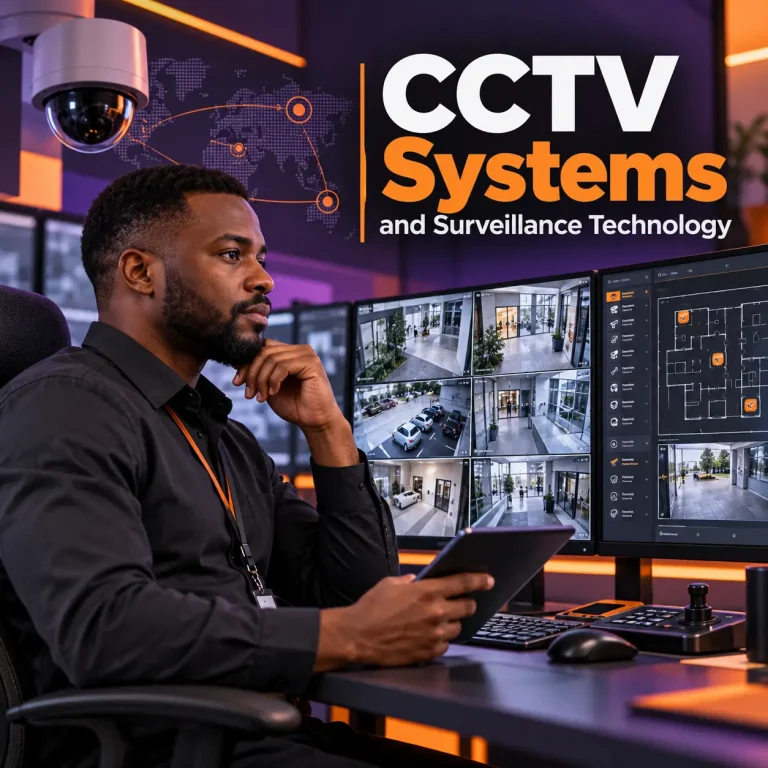
Study a Free CCTV Systems and Surveillance Technology in South Africa with Durban City Academy. The Free CCTV Systems and Surveillance Technology Course with Certificate in South Africa is an online beginner course for people who want to understand how...
The Free CCTV Systems and Surveillance Technology Course with Certificate in South Africa is an online beginner course for people who want to understand how surveillance systems support the protection of people and property. Study camera types, system connections, coverage planning, recording, monitoring, maintenance and responsible use, with a certificate available after completion.
It is suitable for learners interested in workplace security, facilities, retail operations or the basics of CCTV installation and monitoring. You will explore how cameras, recorders, storage and viewing equipment work together, then consider practical tasks such as choosing camera positions and checking common faults.
If CCTV is new to you, the course provides a useful starting point. It introduces essential terms and system concepts before moving into planning and day-to-day operation, so you can build understanding without needing previous technical experience.
Surveillance systems can help organisations review activity, monitor entrances and support security procedures. Their usefulness depends on more than the cameras themselves: coverage, lighting, storage settings and clear processes all affect what a system can capture and how well it serves its purpose.
In South African workplaces, sites can vary from small offices and shops to shared buildings and outdoor areas. Learners will consider how entrances, priority locations, weather, obstructions and patterns of activity influence camera placement and the type of equipment selected.
Responsible monitoring matters alongside technical knowledge. The course introduces privacy, proportionality and controlled footage handling, encouraging learners to think about what needs to be monitored, who should access recordings and how unnecessary surveillance can be limited.
You will also study basic installation and connection concepts. Topics include planning cable routes, working carefully around occupied areas, understanding power and network connections, and checking whether cameras and recording equipment are compatible.
Recording and review are covered in practical terms. You will explore schedules and recording modes, storage and retention needs, accurate system time, live-view checks, and ways to search for and share footage through controlled procedures.
Maintenance is another core learning area. The course looks at inspecting lenses, housings, mounts and cables, recognising common image or connection problems, and keeping clear records of faults and routine checks.
These skills can support continued learning in security operations, facilities or workplace safety. If you are comparing options, you can also browse free online courses on EduCourse and find other subjects that match your interests.
CCTV knowledge can be useful wherever a site needs to understand how cameras and recording tools fit into everyday security arrangements. A basic grasp of the system makes it easier to discuss coverage needs, identify simple issues and follow established procedures when footage is requested.
This is a practical CCTV technology training course for learners who want a foundation before exploring more specialised study. It connects equipment knowledge with real decisions: which areas need coverage, what image detail is useful, how footage should be stored, and when a system may need attention.
The course also treats surveillance as a responsibility, not just a technical task. Learners consider privacy and proportionality alongside installation and monitoring, helping them approach workplace CCTV with care and a clear purpose.
Explore common security and operational uses of CCTV, while considering privacy, proportionality and the importance of limiting monitoring to a clear purpose.
Learn the basic roles of cameras, recorders, monitors and networks, and how power, connections and storage support a working system.
Identify entrances, priority areas and activity patterns. Consider lighting, weather, obstructions and coverage needs before selecting positions.
Compare basic camera types and consider field of view, mounting height, viewing angle and the detail needed in
CCTV Systems and Surveillance Technology is designed for beginners who want a clear introduction to the subject, with practical lessons, guided learning, and simple explanations that are easy to follow online.
Yes, learners in South Africa can study this course online at their own pace, which makes it useful for flexible learning, personal development, and building practical knowledge from home or work.
This course covers practical learning areas such as Common security and operational uses of CCTV, Key system terms: camera, recorder, monitor and network, Privacy, proportionality and responsible workplace surveillance, Camera types and their basic functions, helping learners build foundational knowledge that can be applied in study, work tasks, and everyday digital learning.
Most learners can work through the course in a few focused hours, but the online format allows you to move at your own pace and revisit lessons whenever you need extra practice.
A certificate is available after successful completion, which gives learners a simple way to show that they finished the course content and assessment requirements online.
These skills are useful because they support workplace readiness, digital confidence, and practical day-to-day tasks, which can help learners strengthen their knowledge in a South African learning and work environment.