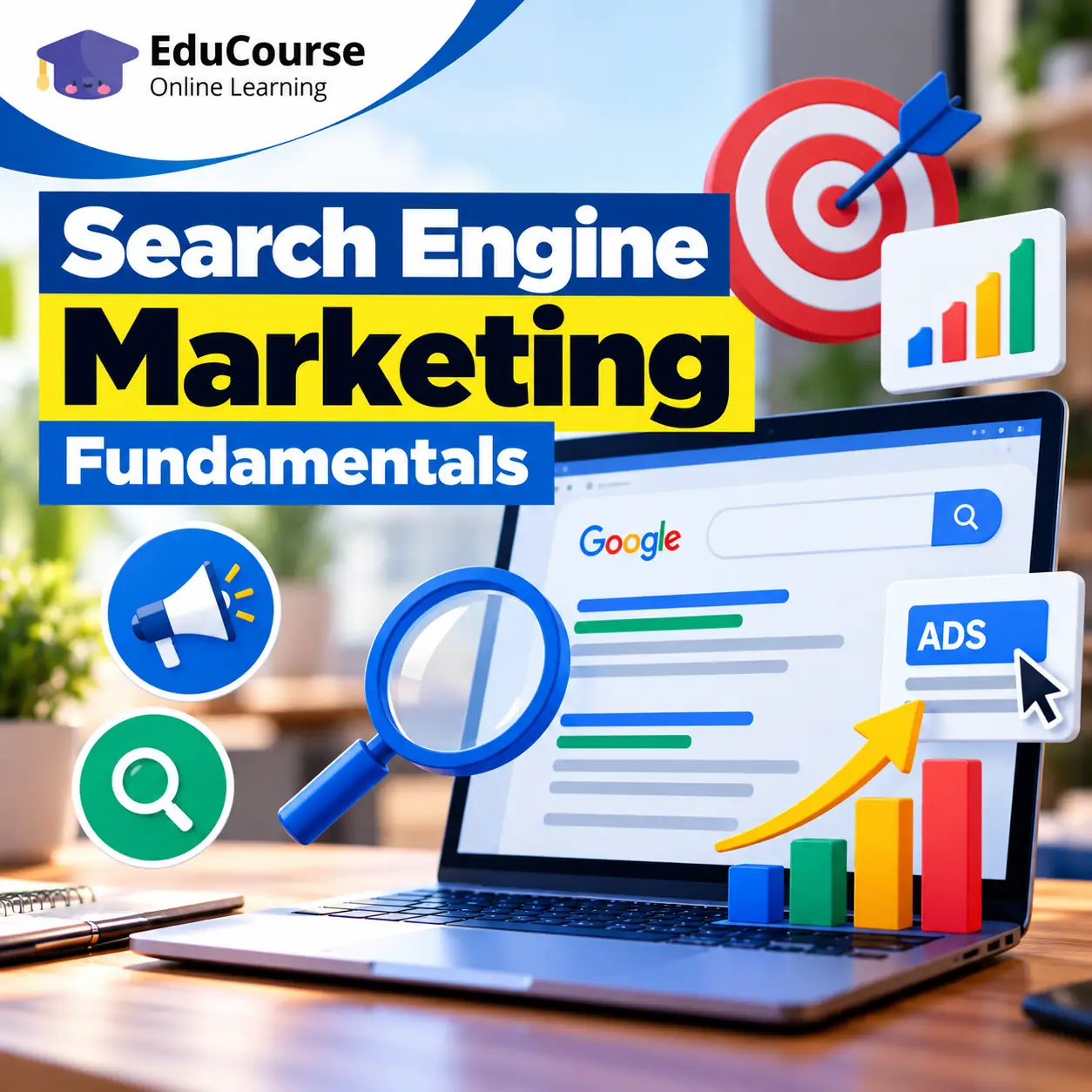
Study a Free Search Engine Marketing Fundamentals Course with Certificate in South Africa with Durban City Academy. Learn how paid search and organic search.
10 lessons with topics and quizzes.
The Free Search Engine Marketing Fundamentals Course with Certificate in South Africa introduces you to using paid search to reach people looking for products or services. It is an online course for beginners, small business owners and aspiring digital marketers. You will study keywords, campaign planning, search ads, budgets and performance tracking, with a certificate available after completion.
If you are new to search marketing, you can start with the basics and build towards a practical campaign plan. The lessons cover how to identify customer search needs, organise keyword themes, write relevant ads and assess whether a campaign is making progress towards its goal.
Search engine marketing (SEM) is a way to gain visibility in search results through paid advertising. This beginner course explains the moving parts in straightforward terms, so you can understand how a search campaign is planned, launched and improved without needing prior marketing experience.
For a South African business, search ads can help put an offer in front of people who are actively looking for a service or product. The course considers practical decisions such as which locations to target, what a realistic campaign objective looks like and how to match an ad to a local customer’s needs.
Paid and organic results can appear together on a search results page, but they work in different ways. Understanding both helps you see how search visibility fits into the customer journey. This guide to paid search and organic search offers useful context.
Campaign performance is about more than clicks. You will explore how to define valuable actions, review costs and interpret early results. For example, a service business may care more about relevant enquiries than a high number of visits. Understanding conversion tracking can help make that distinction clear.
Learning areas include keyword research, campaign structure, ad writing, bidding and budget planning. You will also consider how to make a landing page relevant, useful on mobile and easy for a visitor to navigate.
The course introduces practical ways to reduce wasted effort, including reviewing search terms and adding negative keywords when searches are not relevant to the offer. You will also learn to make controlled changes rather than adjusting several parts of a campaign at once.
Across the lessons, you will connect campaign goals to measurable actions and learn to explain results clearly. The aim is to give you a useful foundation for planning and reviewing search marketing, whether you are exploring digital marketing or supporting a small business.
After completing the course, you can continue building your knowledge with related learning guides and courses. The certificate recognises completion of the course; your practical campaign plan can also help you organise and present what you have learned.
Explore how paid search works alongside organic visibility and how a search results page can support different stages of a customer’s journey.
Learn to start with customer questions and business offerings, then group terms by informational, navigational or transactional intent. You will consider relevance, competition and likely demand. For a practical starting point, see how customer questions can become keyword themes.
Organise campaigns around goals and offers, create focused ad groups from related keyword themes, and consider settings such as location and language.
Practise aligning headlines, descriptions and calls to action with the keyword and the searcher’s need. You will also look at ad assets that can provide additional useful information.
Understand auctions, bids and cost per click, then consider how a daily budget and bidding approach can fit the campaign’s objective and available data.
Learn why the destination page should deliver on the ad’s message, work well on mobile and make the next step clear. You will also consider which actions matter enough to define as conversions.
Explore audience, location and schedule settings, use negative keywords to filter irrelevant searches, and keep ad claims accurate and appropriate.
Use a pre-launch check for keywords, ads, budget and destination pages. Then review early delivery signals and make measured improvements. The <a href="https://www.educourse.co
10 lessons with topics and quizzes covered in this course.
Search Engine Marketing Fundamentals is designed for beginners who want a clear introduction to the subject, with practical lessons, guided learning, and simple explanations that are easy to follow online.
Yes, learners in South Africa can study this course online at their own pace, which makes it useful for flexible learning, personal development, and building practical knowledge from home or work.
This course covers practical learning areas such as How paid search and organic search visibility work together, The search results page and the customer journey, Setting realistic search marketing goals for a business, Identifying seed terms from products, services and customer questions, helping learners build foundational knowledge that can be applied in study, work tasks, and everyday digital learning.
Most learners can work through the course in a few focused hours, but the online format allows you to move at your own pace and revisit lessons whenever you need extra practice.
A certificate is available after successful completion, which gives learners a simple way to show that they finished the course content and assessment requirements online.
These skills are useful because they support workplace readiness, digital confidence, and practical day-to-day tasks, which can help learners strengthen their knowledge in a South African learning and work environment.